Discovery Cove and Brevard Zoo: What to Do With the Days Around a Florida Cruise
The days around a cruise are easy to underplan. You’ve spent months obsessing over the sailing itself: the restaurants, the cabanas, the excursions. And then you look up and realize you have a full day in Florida before you board and another between sailings and you’ve made no decisions about them at all.
We’ve been there. And we’ve also been on the other side of it, which is what happened last year: we had a day before our Disney Wish sailing and a day between the Wish and the Disney Magic, and Barbara had plans for both of them.
We are very glad she did.
TL;DR: Discovery Cove (before your Port Canaveral sailing) and Brevard Zoo (between ports) are two of the best ways to use the days around a Florida Disney cruise. Both are nature-forward, low-crowd alternatives to the theme parks. Brevard Zoo in particular is a gem that most families driving between ports have no idea exists.
Is Discovery Cove worth it for families with young kids?
Yes, but you need to know what you’re paying for and go in with clear expectations about logistics with toddlers.
Discovery Cove is an all-inclusive day resort in Orlando: one admission price covers breakfast, lunch, unlimited drinks (including alcohol for the adults), access to a snorkeling lagoon, a lazy river, a free-flight aviary, and bird-feeding stations throughout the park. It’s deliberately low-capacity, which means it never feels crowded. On an average theme park day, “uncrowded” means you waited 40 minutes instead of 80. At Discovery Cove, it means you could hear yourself think at the aviary and find a beach chair without circling the property. It felt less like a park and more like a very well-stocked private beach that happened to have rays in it.
The closest comparison I can make: imagine a day at a beautiful all-inclusive resort, except instead of a swim-up bar and a pool, you have snorkeling with tropical fish, a lazy river lined with waterfalls and grottos, and an aviary where birds land on you.
We would not have gone if Barbara hadn’t brought us. It’s expensive. And having been, I understand why it’s expensive, and I’d go again.
How much does Discovery Cove cost?
General admission is $200 per adult. Kids 2 and under are free. A private cabana is an additional $299.
That price includes breakfast, lunch, and unlimited drinks, alcoholic and non-alcoholic both. Florida residents get a discount, and Barbara may have gotten a deal through our hotel (details below; she’s currently hiking the Pacific Crest Trail and cannot be reached by normal means, but we’ll update this when she’s back).
For context: a Discovery Cove ticket is roughly comparable to a single-day theme park ticket at Disney or Universal, except it includes food and drinks and has a fraction of the crowds. If that trade-off sounds right for your family, it probably is.
Animal encounter add-ons (dolphin swims, etc.) are available at additional cost and we didn’t do them, so we can’t speak to those.
Is the cabana worth the upgrade?
We think so, yes.
Our cabana had a private patch of sand, a hammock, a couch, a mini fridge stocked with water and soft drinks, and a snack basket for the kids. The sand throughout the whole park is something I need you to understand: it is pillow-soft and fluffy and deep, the kind of sand you don’t usually encounter outside of a very good Caribbean beach. Raccoon discovered this within approximately four minutes of arrival and spent the better part of the morning throwing himself onto it face-first and giggling. Every time.
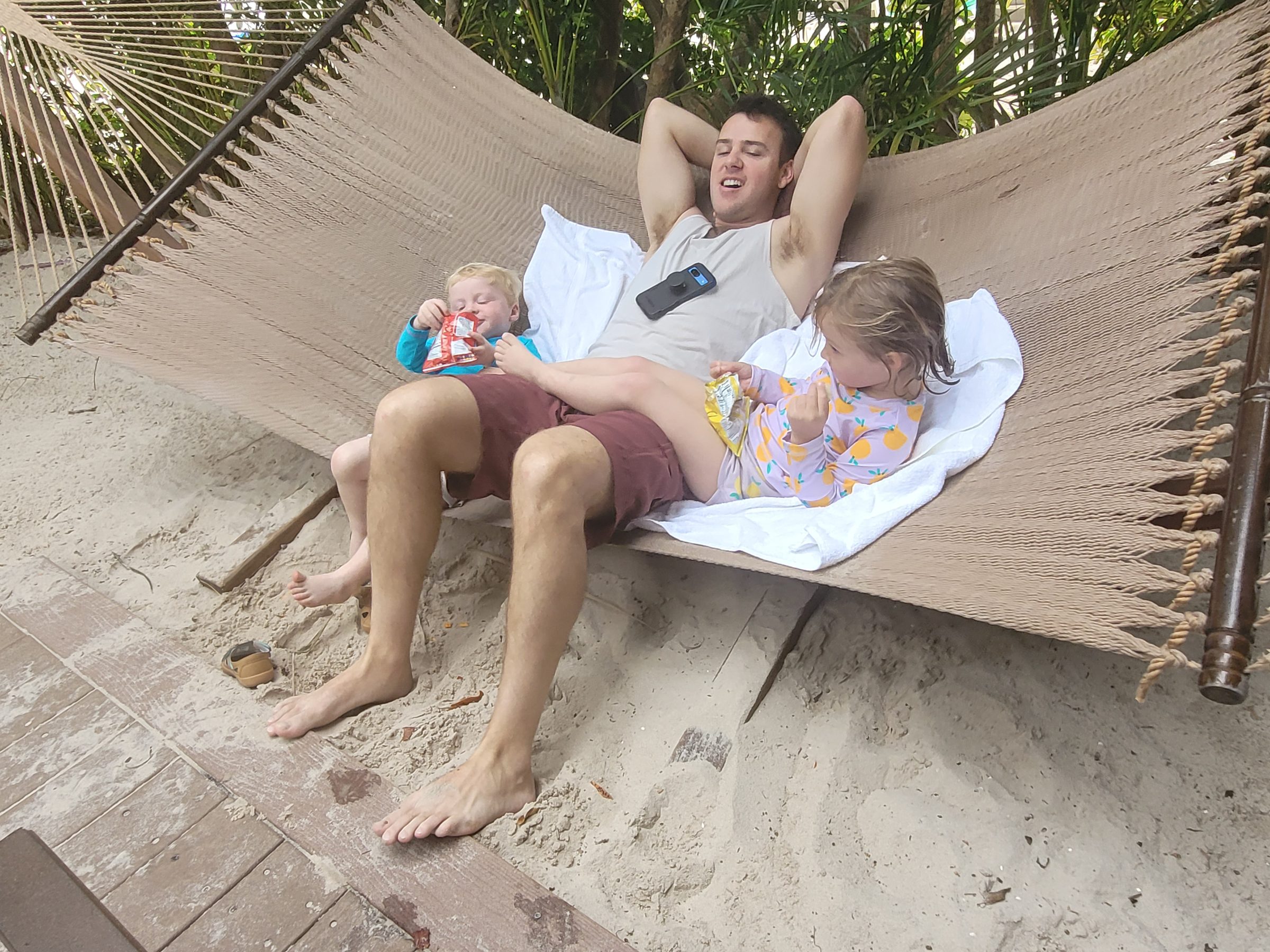
The snack basket was also a hit. We don’t keep chips at home, which meant Raccoon treated each Dorito with the reverence usually reserved for something much more significant. Jim and I watched from the hammock while the two of them gleefully sorted through what they’d been given, and neither of us said a word about the Doritos.
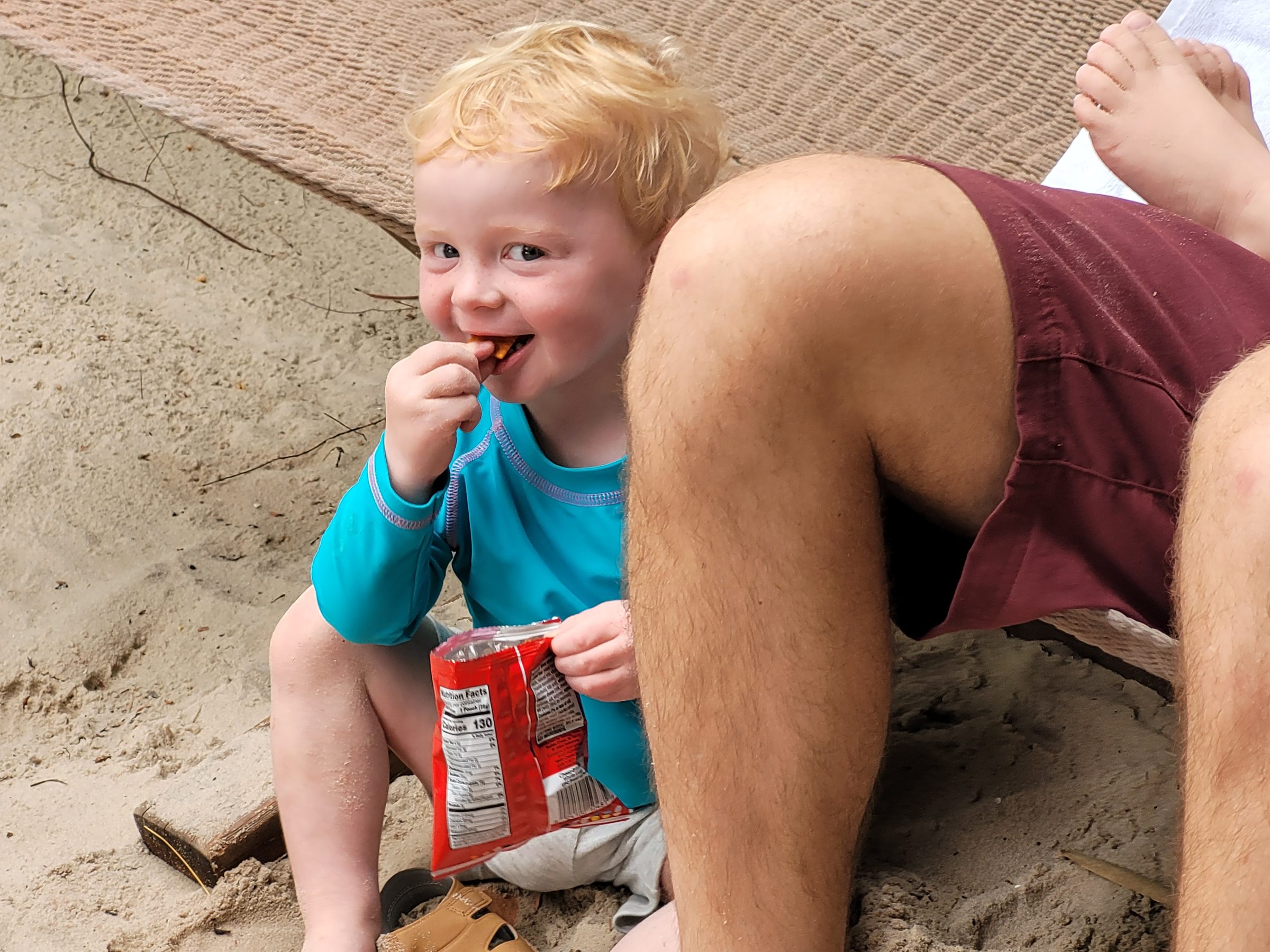 He found the Doritos extremely significant.
Having a home base matters at a place like Discovery Cove. When you want to be in the water, you go. When someone needs a break, the cabana is there. We rotated through it all day. Barbara and Rabbit covered more of the park while Jim, Raccoon, and I did the lazy river and settled into the shallow pool by the bar, and then we’d all meet back up in the sand.
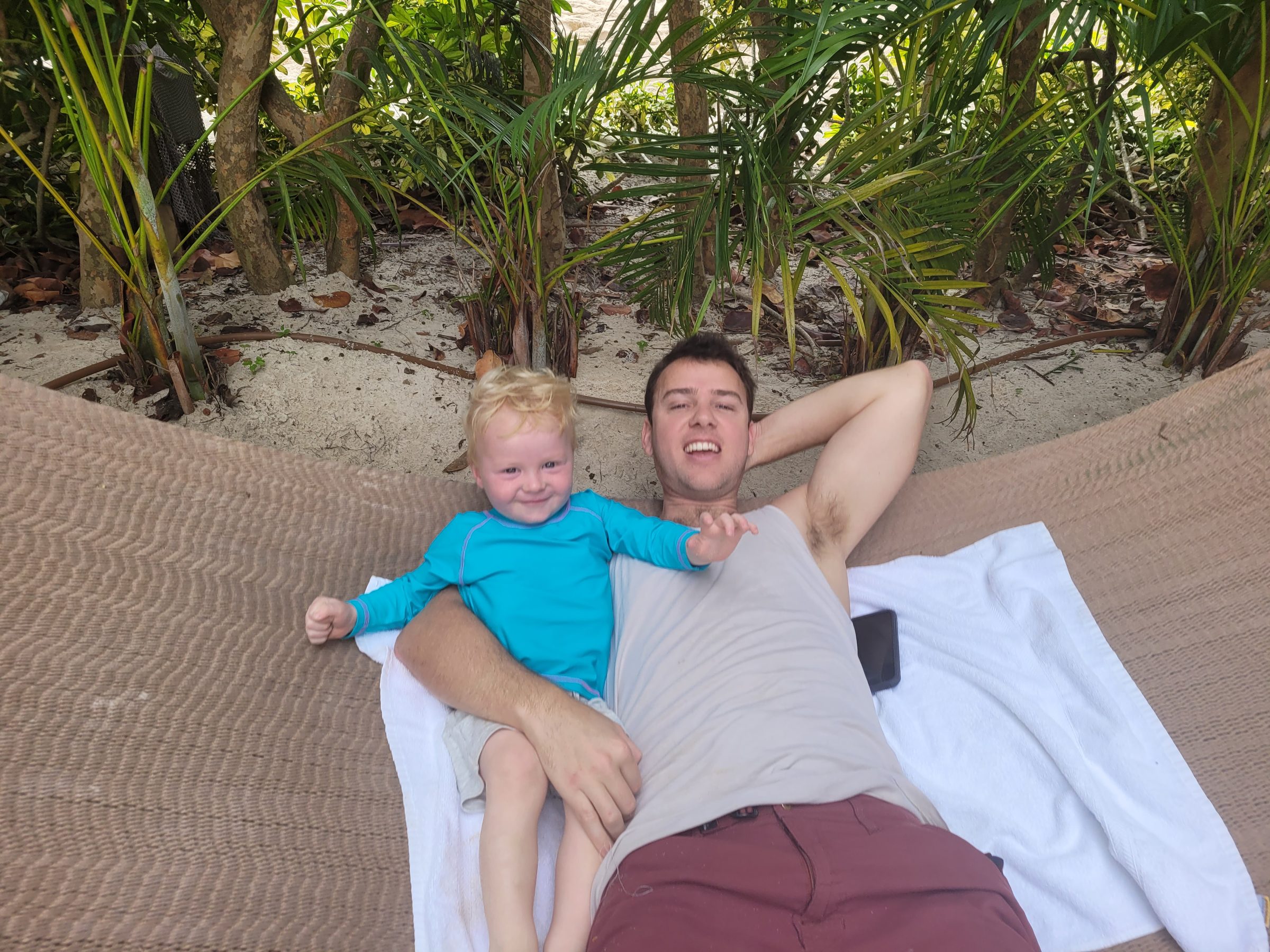 The hammock got a lot of use.
What should you know before taking toddlers to Discovery Cove?
A few things that are not on the website and that I wish someone had told us.
No plastic flotation devices. Because there are animals in the water, traditional pool floaties and tubes aren’t allowed in the lazy rivers. You use pool noodles instead, which work fine for adults and are workable for older kids. For a two-year-old? You are either holding a noodle and a toddler simultaneously, or you are treading water while holding the toddler with both arms. The lazy rivers are too deep to stand in.
The life vests available in Raccoon’s size had a behind-the-neck flotation section that he hated with a profound, bone-deep passion. He made his feelings on this very clear. We ultimately abandoned the vest and went with Jim holding him, which worked fine because Jim spent years playing water polo and has an extremely strong egg beater kick. If your partner does not have this skill, plan accordingly.
The bar pool is your friend. The shallow pool adjacent to the bar is the only one in the park where you’re allowed to have a drink. It also has built-in underwater lounge chairs and is the most accessible spot for kids who just want to splash around without navigating the lazy river. Raccoon found this pool immediately and did not want to leave. It worked out perfectly for everyone involved.
Lunch timing. The lunch line looks alarming right when it opens because most guests arrive at the same time. If you wait twenty minutes, it clears up. We’d skip the rush next time. Sometimes hungry kids don’t give you the choice.
Where did we stay before the Port Canaveral sailing?
Barbara booked us into a timeshare-style resort near Orlando that was lovely: well-situated, saved us money compared to a Disney property or a standard hotel, and had plenty of room for the whole crew to spread out. I cannot, for the life of me, remember what it was called. Barbara can, but she’s currently somewhere in the desert on the Pacific Crest Trail and is not taking questions. I’ll update this as soon as I can get her on the phone.
Is Brevard Zoo worth stopping at between Disney cruise ports?
Yes, and it’s a particularly good option if you’re driving from Port Canaveral to Fort Lauderdale between sailings, because Brevard Zoo sits almost directly on that route and gives you a reason to stop that isn’t just gas station coffee.
Barbara had planned this one ahead of time. The goal was to break up a long drive for the kids and give them something worth stopping for before we boarded again. The zoo delivered on both.
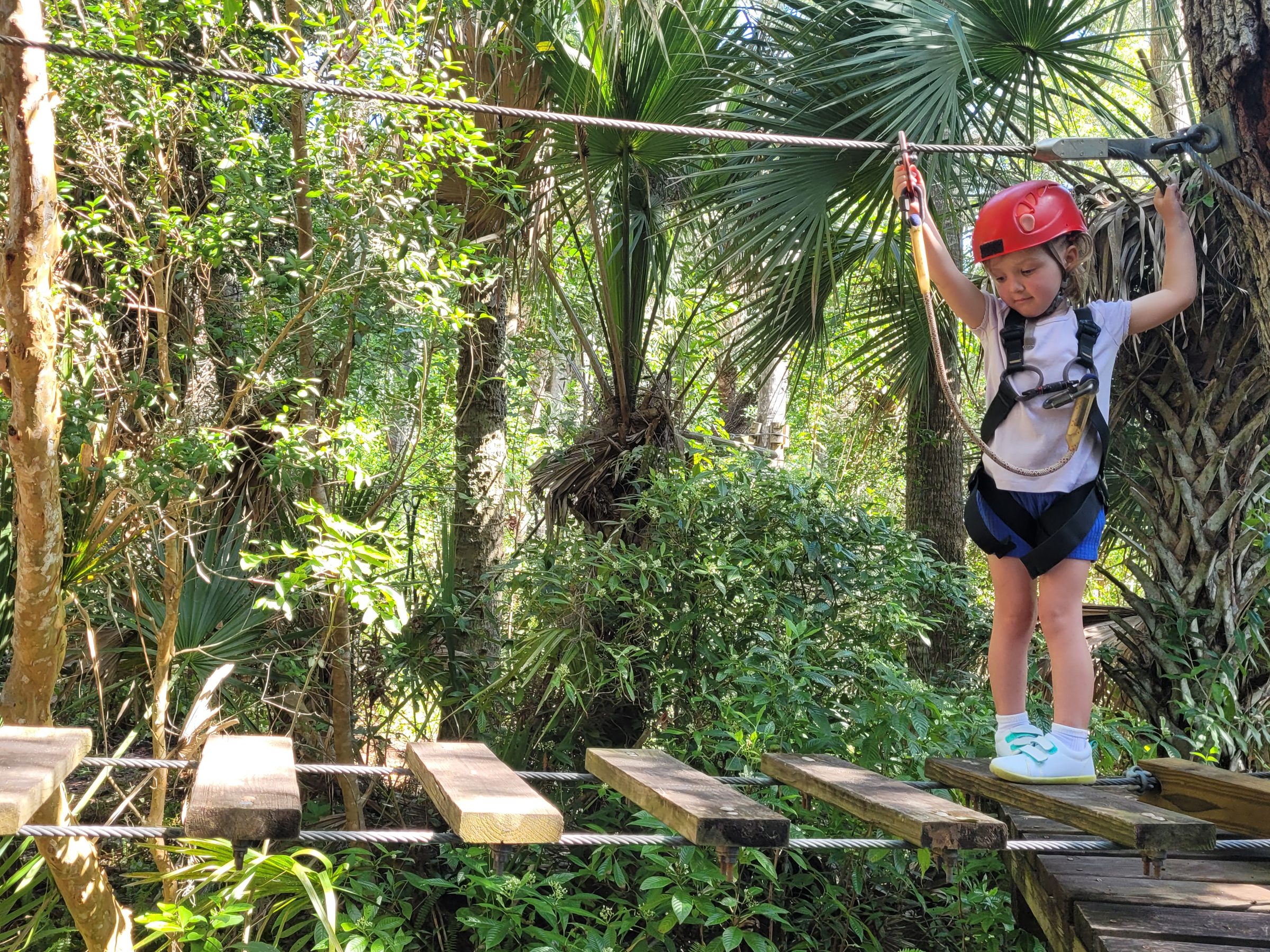
What is Treetop Trek Chutes at Brevard Zoo, and is it right for your kid?
Treetop Trek Chutes is a kids-focused adventure ropes course with 22 elements and 2 zip lines. It’s designed for ages 3 and up, takes 30–45 minutes, and includes zoo admission. Cost: $34 for ages 3–11, $46 for ages 12 and up.
We did this with Rabbit, who was four and a half. I can tell you it’s right for a kid who is physically confident, willing to solve a puzzle under pressure, and the type who gets more determined when something is hard rather than more reluctant.
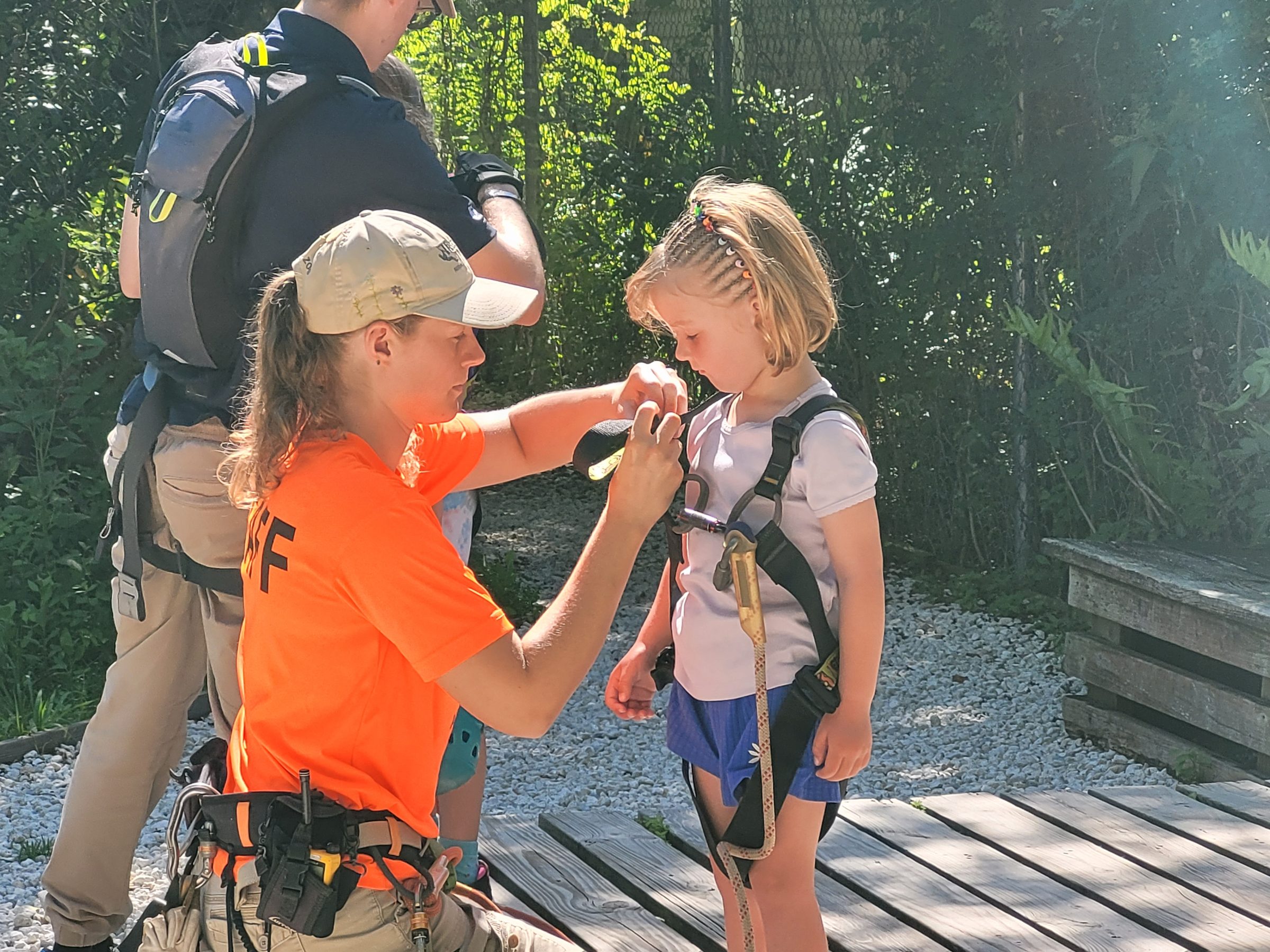 Ready. Probably more ready than the parents watching her.
The carabiner system is the thing to know about. It’s a continuous belay: the carabiner never leaves the cable, but at each junction you have to maneuver it past the connector to transfer to the next section. You’re always attached, but figuring out the right grip and angle to clear the connector takes real dexterity and focus, especially with small hands. I watched Rabbit’s face as the guide demonstrated it before the course started and thought: this might be the thing that stops her.
It wasn’t. She fumbled through it a few times on the first element, got a feel for it, and by the second one she was moving through the sequence without thinking. By the end she was ready to pass the other child on the course in front of her.
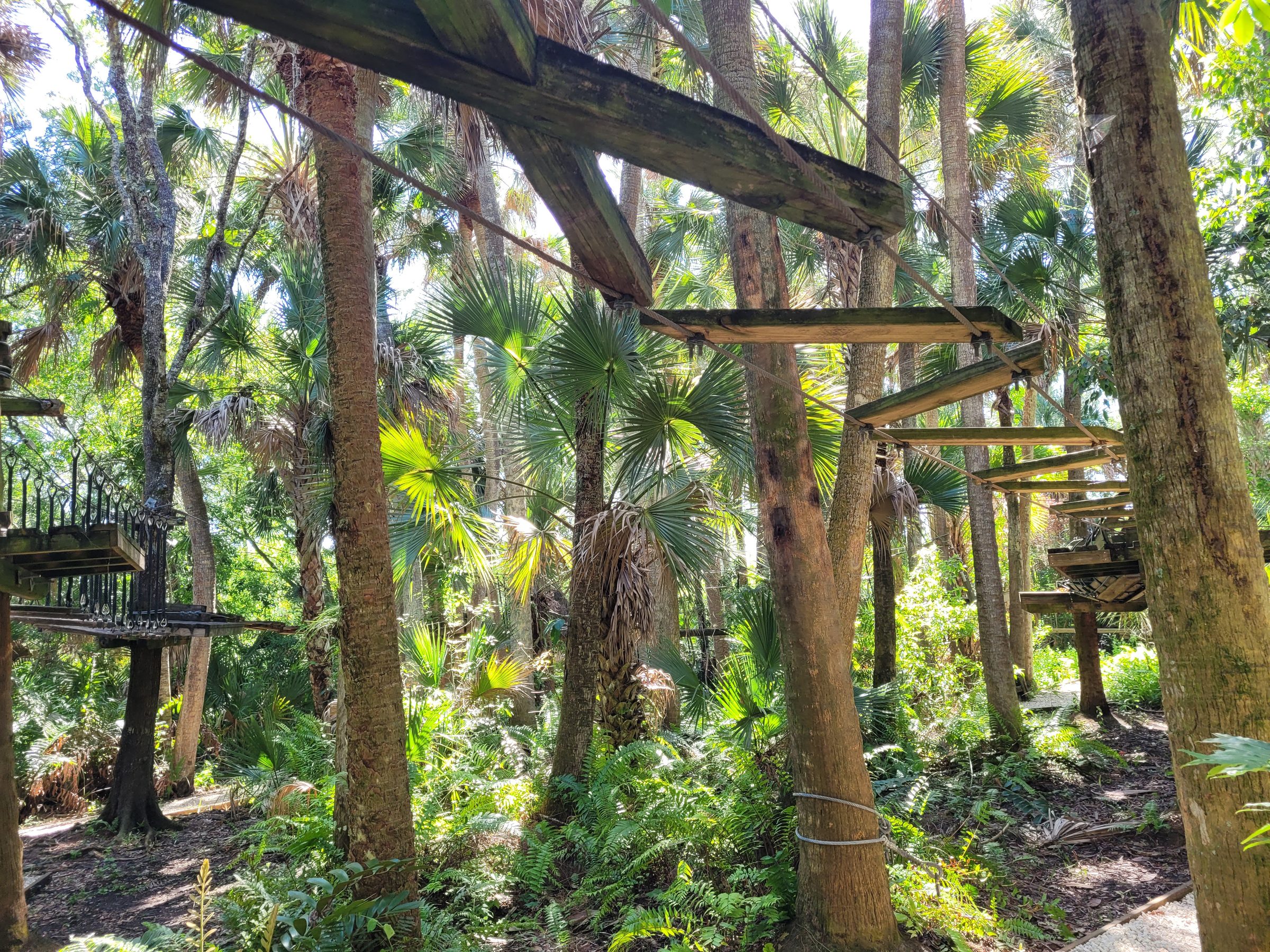
That other child is part of the story. She was probably ten years old, older than Rabbit by several years, and she hit a section partway through the course and froze. Froze, high up, unable to move forward or back. The guide handled it beautifully: got a ladder, went up, talked her through it calmly. She got through the whole thing, with Rabbit right behind her, visibly worried about this older kid, checking over her shoulder, waiting. She told me she felt bad that the girl was scared and that different people get scared of different things.
She completed the full course. Today, when I ask her about it, she says she remembers it and she wants to do it again.
This is a good thing, because as a family we do a lot of ropes courses. She’s going to encounter harder ones. But this was the right first one: just challenging enough, just safe enough, the kind of experience that teaches a four-year-old something about herself.
While Rabbit and I were on the course, Jim, Barbara, and Raccoon went around the zoo. Raccoon slept in his stroller for most of it. We were fresh off a Disney cruise and everyone was operating on fumes. Jim may have caught a catnap on a bench. Barbara explored with Raccoon when he woke up. No one felt any particular way about this; it was the right pace for the day.
What else is worth doing at Brevard Zoo?
The giraffes were a highlight. There was a young one, small enough that you could see it was still figuring out its legs, and an ostrich in the same enclosure that had apparently decided the baby giraffe was its nemesis. It would puff up enormous, spread its wings as wide as they’d go, and then charge. The baby giraffe would scramble away. The adult giraffes were completely indifferent to all of this. The ostrich was not deterred.
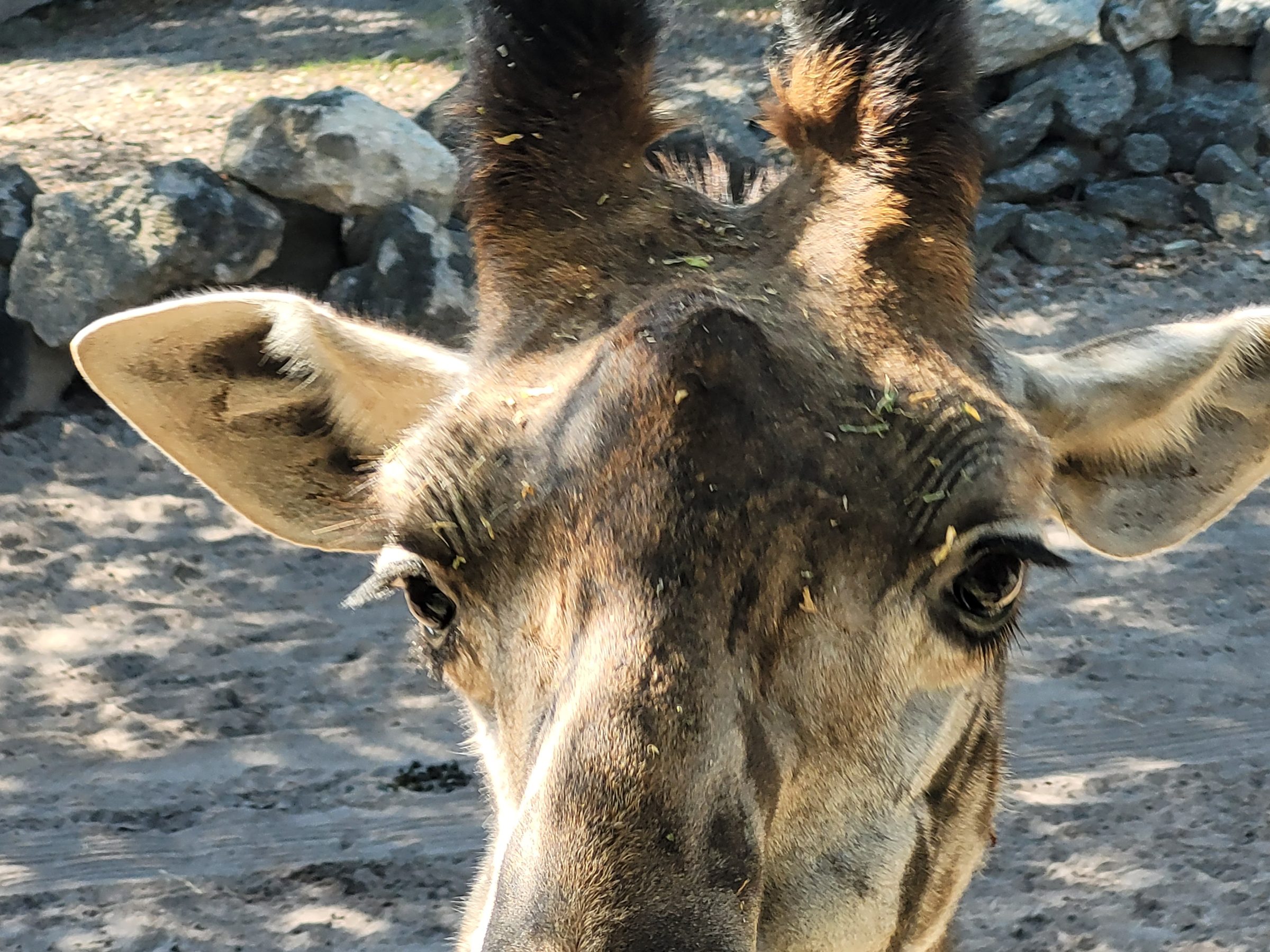 Completely unbothered. The ostrich did not feel the same.
There were also large birds swooping into the water near the zoo pathways and diving under, staying under for what felt like an improbably long time before surfacing. Apparently these are just native Florida birds doing normal Florida bird things. They were spectacular.
Other things worth knowing about: a small train ride (Jim, Barbara, and Raccoon did this one), a splash pad cooling area, a nice aviary, and Dippin’ Dots. Rabbit has mentioned the Dippin’ Dots more than once when asked what she remembers about the zoo.
How much does Brevard Zoo cost?
General zoo admission: $35 ages 12–64 / $29 seniors (65+) / $23 kids (3–11) / free for ages 2 and under.
Treetop Trek Chutes (includes admission): $34 ages 3–11 / $46 ages 12 and up. If your kid is doing the ropes course, skip buying separate zoo admission; it’s folded in and you save $6.
Frequently Asked Questions
Is Discovery Cove appropriate for kids who are scared of fish or open water? Probably depends on the kid. The snorkeling areas and lazy rivers have fish and rays visible in the water, and you can’t always avoid them. Rabbit was a bit wary of the rays when Barbara took her into the snorkeling lagoon, so they went to the aviary instead. There’s plenty to do in the shallower areas without going near the bigger animal zones.
Do you need to book Discovery Cove in advance? Yes. It’s capacity-limited by design, which is what keeps it from feeling crowded, which means it sells out. Book well ahead, especially for peak season or if you have specific dates around a cruise departure.
Can you do Brevard Zoo in a half day? Comfortably, yes. We spent a few hours there including the ropes course and felt like we’d seen the highlights without rushing. If you have a full day and young kids, you could pace it out more, we’d have loved to linger longer.
Is Treetop Trek Chutes too scary for younger kids? The course is designed for ages 3 and up, and our four-year-old handled it without freezing. The carabiner system is the real challenge: it takes some fine motor coordination and patience to figure out. If your kid tends to shut down when something is hard, it might be frustrating. If they’re the type who gets stubborn about a puzzle until they crack it, they’ll probably love it.
How much driving is involved between Port Canaveral and Fort Lauderdale? It’s roughly a 3.5-hour drive without stops, depending on traffic. Brevard Zoo is in Melbourne, Florida, about 45 minutes south of Port Canaveral, which makes it a logical first stop without adding significant distance.